
 Български

 Cyberthread Defence
 Data Protection & Backup
 Identity and Access Protection
 Strengthen Security Posture
 Physical Security IT Solutions
 Implementation, management and development
 On-premise
 Hybrid
 Cloud
Cloud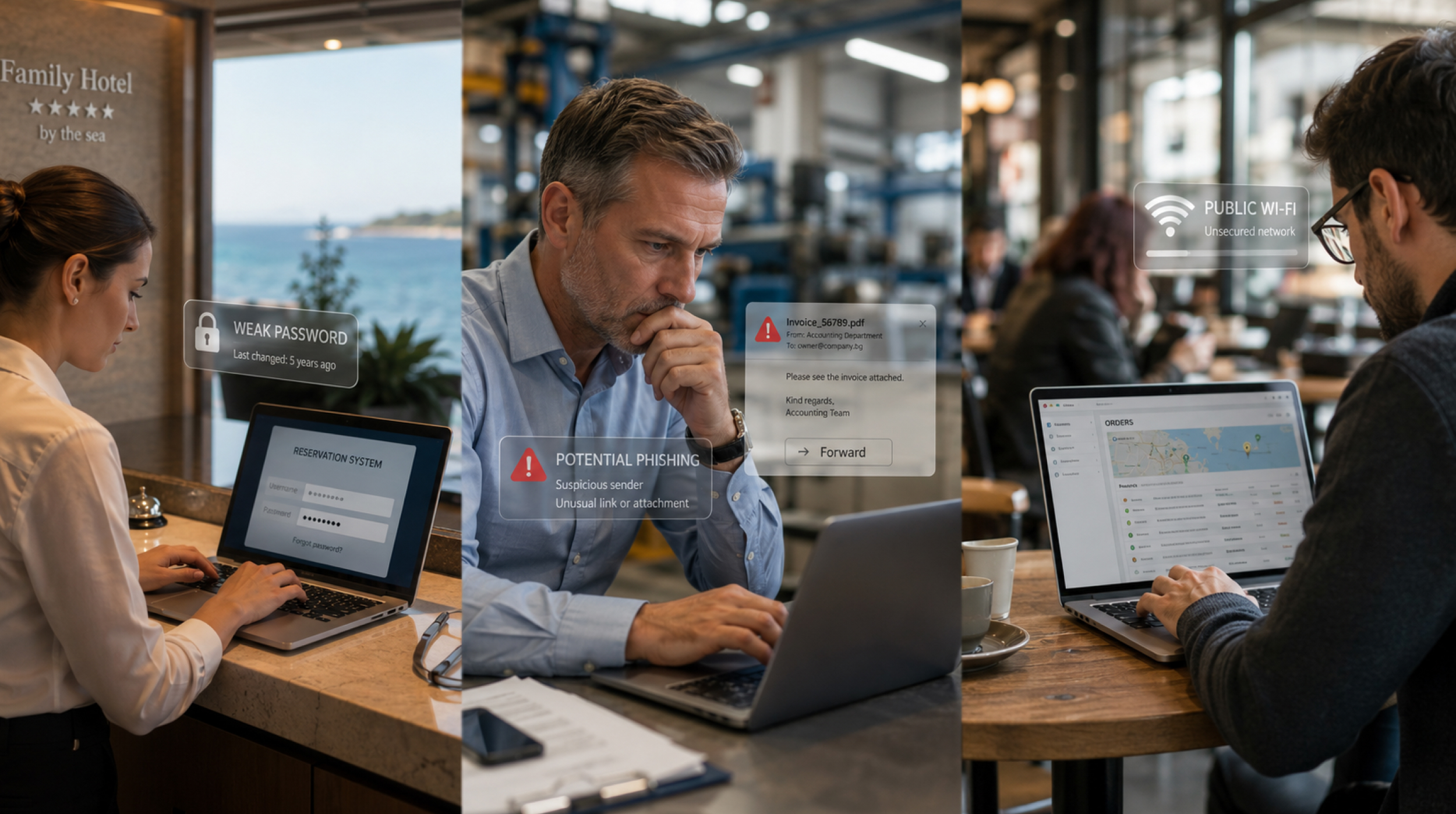
Cybersecurity is not one-size-fits-all. It is context-driven.
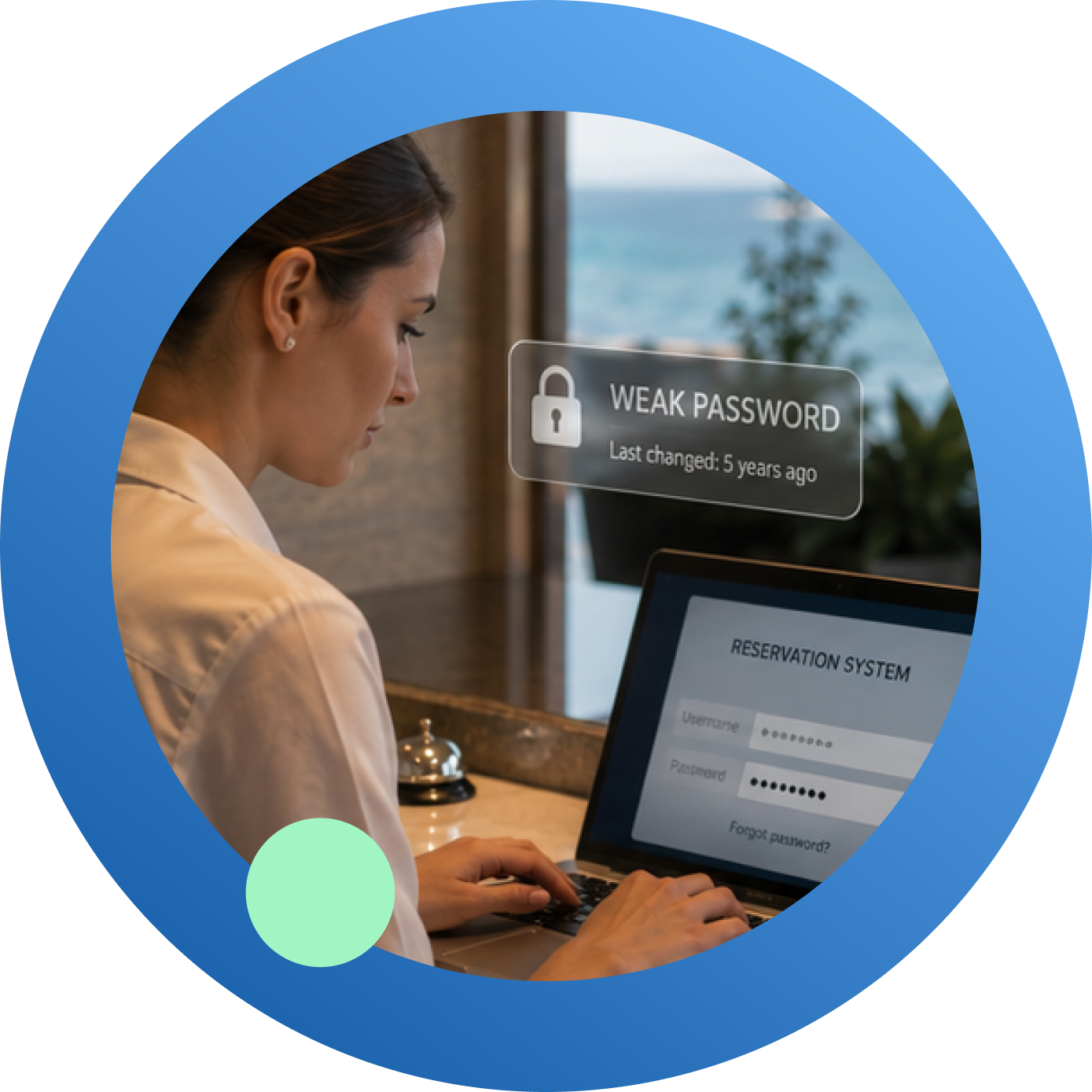
The receptionist at a family-run seaside hotel unlocks the reservation system using a password created five years ago. In a manufacturing company, the owner forwards an invoice to the accountant without realizing it is a well-disguised phishing email. In a small logistics company, a dispatcher updates orders from a laptop in a café connected to an open Wi-Fi network.
These scenarios are not fictional. They happen every day. And that is exactly why they should not be underestimated.
Today, cyber threats rarely resemble the movie-style hacker attacks we imagine — a masked figure in a basement breaking into your computer with two clicks while a giant “X” flashes across the screen. In reality, there are no alarms, no red warning messages — the damage only becomes visible at the end. For small businesses, this often means disrupted operations, lost data, or even a collapsed business.
And this raises the question more and more entrepreneurs are asking: can small businesses afford an effective and accessible cybersecurity system?
Increasingly, the answer is yes — especially when protection does not rely solely on people, but is supported by automation and intelligent technologies powered by artificial intelligence.
From an “IT problem” to a business reality
For a long time, cybersecurity was seen as a task for “the IT guys.” Buy an antivirus solution, set up a firewall, create a basic password policy, and that was enough. This worked in a world where business was mostly offline and digital systems played only a supporting role.
Today, the opposite is true — finances, supply chains, customers, contracts — everything flows through digital channels. A single compromised email or infected device can interrupt the entire chain. And small companies are especially vulnerable, not because they are important, but because they are often easier targets.
Hackers are not looking for fame. They are looking for efficiency. In this context, cybersecurity is no longer a technological accessory, but part of business maturity.
The Winnie-the-Pooh paradox: the more technology, the more risks
Ironically, the same digitalization that gives small businesses freedom and flexibility also opens new vulnerabilities. Cloud services, remote work, mobile devices, external partners — every convenience becomes a potential attack point. This is where the key problem emerges: human capacity does not grow at the same speed.
A small company simply cannot monitor network traffic, user behaviour, suspicious logs, and new attack vectors 24/7. That requires time, expertise, consistency… and people dedicated to doing it. And this is precisely where artificial intelligence appears — not as a trendy buzzword, but as a natural response to complexity and as support for human capabilities.
Upload Image...
Artificial intelligence as silent infrastructure
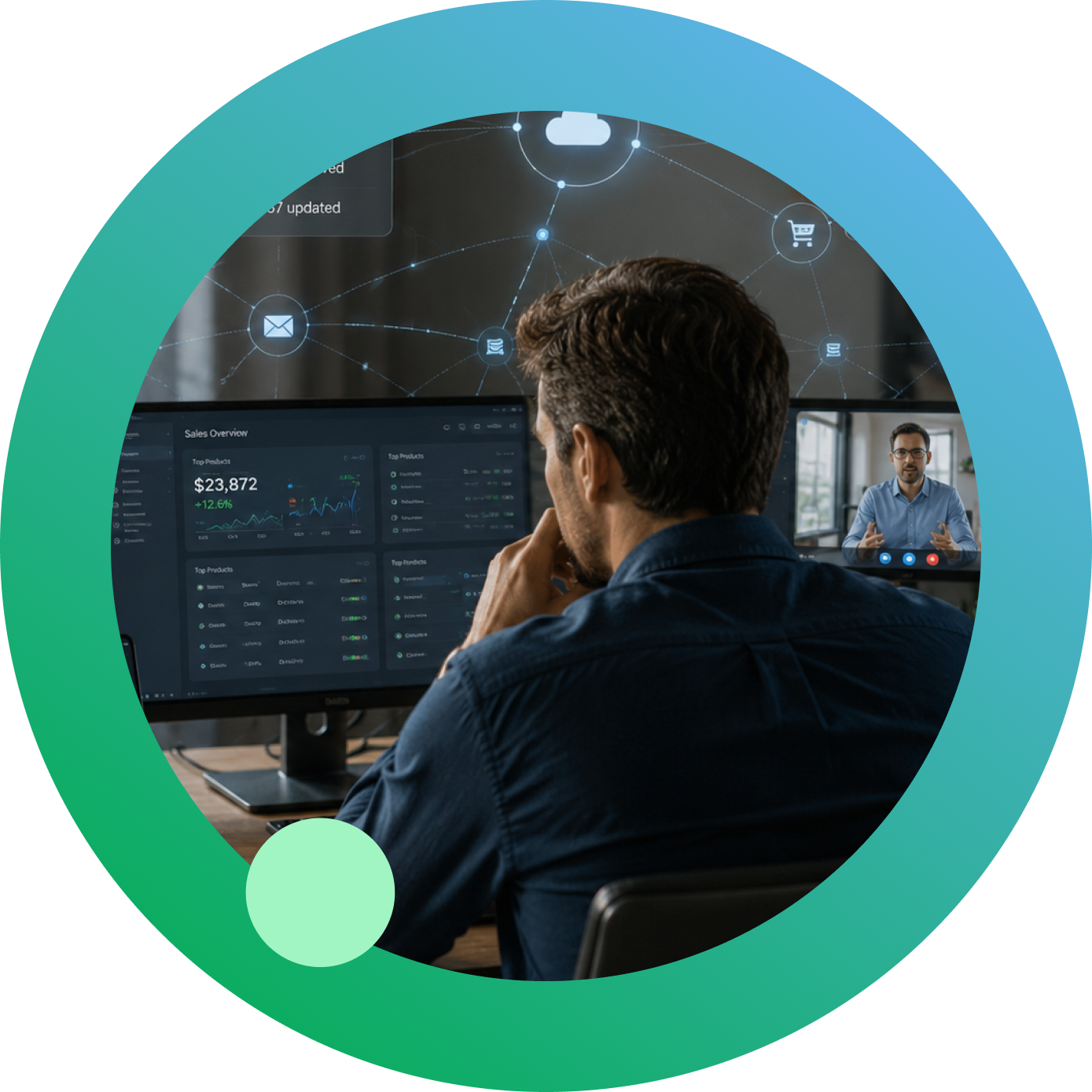
AI in cybersecurity is rarely visible. It does not “speak,” give interviews, or sit in the spotlight. But it works constantly. Its real strength is not that it “knows everything,” but that it analyzes enormous volumes of data, recognizes behavioral patterns, and detects anomalies in real time.
Unlike traditional security systems, which wait for something predefined to happen — following a rigid “template” — AI systems build context. They learn what normal organizational behavior looks like: who logs in, when, from where, and with what actions — and they react when something falls outside those patterns.
Automation: the small business’s most valuable ally
For small companies, the greatest advantage of AI is not high intelligence, but automation.
Processes that would otherwise require expensive expert labor can happen continuously, consistently, and without fatigue.
System monitoring, compromised account checks, analysis of suspicious activities, even the initial response to incidents — all of this can be automated. In many cases, the system first “tightens” security and only then alerts a human. The result is not simply more protection, but less chaos.
The benefits that never appear in the IT budget
When automation takes over monitoring and the initial response, the effect is rarely impressive at first glance. There are no dramatic demonstrations and no feeling of a “major investment.” Yet the business begins to operate differently.
Incidents do not disappear completely – surprises do. And that means fewer disruptions, fewer crisis-driven decisions, and fewer days when everything comes to a halt because “someone clicked on something.”
Business Resilience
Fewer disruptions and fewer crisis-driven decisions.Operational Efficiency
Less time lost and fewer resources spent on reactive problem-solving.
Focus
Teams can concentrate on serving customers, fulfilling orders, and driving business growth.Trust
A mature approach to cybersecurity helps build long-term trust and confidence.
AI as Navigation, Not Autopilot
It is important to avoid the other extreme — blind trust in technology. AI is not magic, and it does not make business decisions. It provides insights, analyzes patterns, and responds within frameworks defined by people.
The best results are achieved when there is a clear strategy, employees are properly trained, and a culture of digital responsibility is in place.
AI is the navigation system, but people still hold the steering wheel.
Regulations as a catalyst, not a threat
Regulatory frameworks such as GDPR and NIS2 are often perceived as a burden for small businesses. In reality, they should be viewed as a direction and a signal of where the world is already heading: data has become critical infrastructure.
AI-driven automation significantly simplifies exactly this side of the equation — accountability, traceability, access control, and incident detection. This transforms regulations from a bureaucratic burden into a framework for a more mature and resilient business.
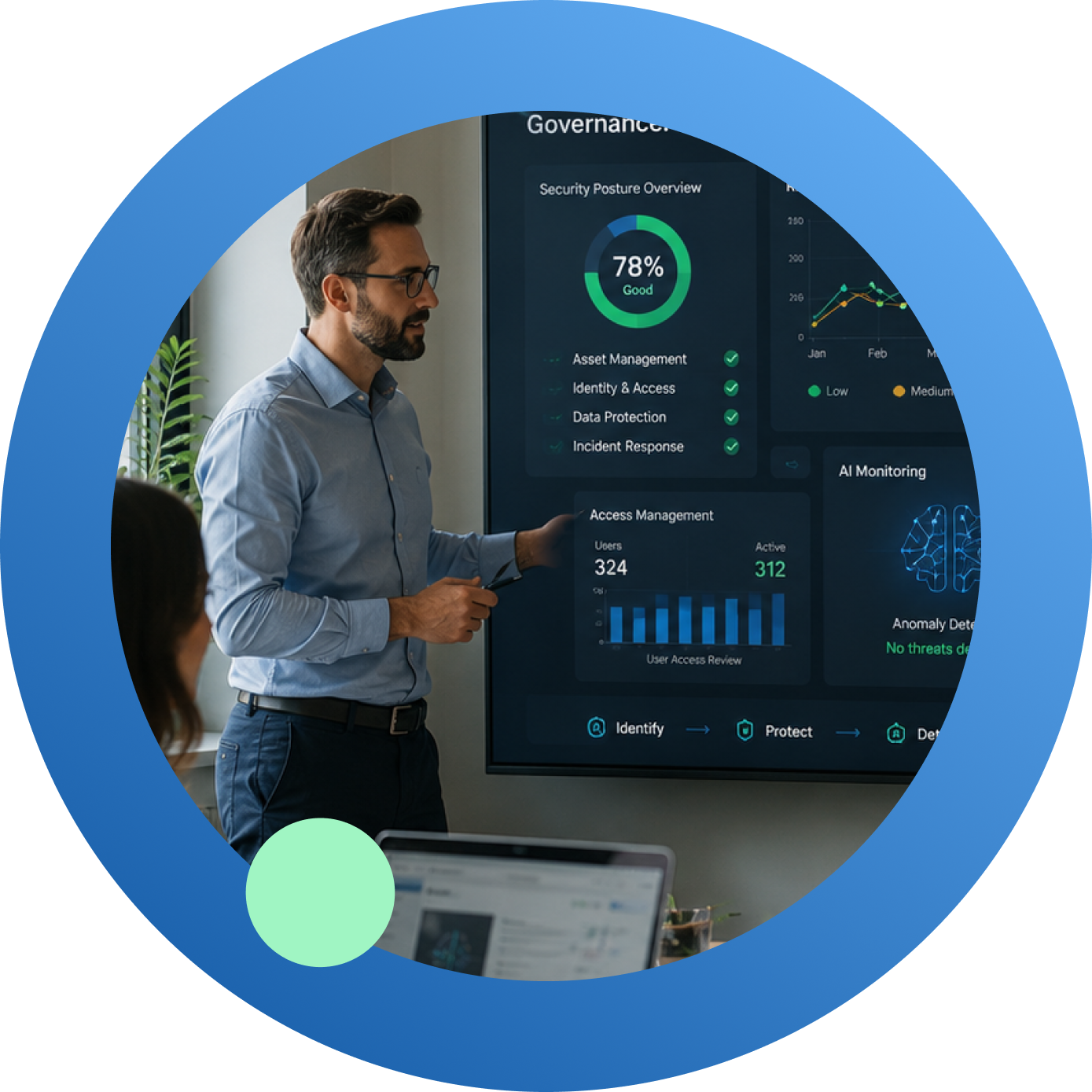
The new normal
In the coming years, the question will no longer be “Do you use AI for security?” but rather “How did you ever function without it?”
Just like accounting software, cloud email, or online payments, AI-based cybersecurity will gradually become an invisible standard — silent infrastructure that allows small businesses to be bold rather than vulnerable.
Peace of Mind as a Strategic Advantage
Ultimately, the most valuable benefit of AI-powered automation is not something that can be measured through charts and KPIs. It is quieter. And more human.
It is the peace of mind that your business will not be brought to a standstill by a rushed click, a well-disguised scam, or a long weekend without oversight. It is the confidence that, somewhere in the background, a system is continuously monitoring, learning, and responding without disruption or unnecessary alarm.
In an increasingly complex digital environment, small businesses rarely move forward alone. More often, resilient organizations are supported by partners who understand not only technology, but also the realities of entrepreneurship — limited resources, local business challenges, and the need for practical rather than flashy solutions.
This is where companies like LIREX make a difference. With expertise in cybersecurity, automation, and AI solutions, combined with the ability to translate complexity into clear, actionable guidance, LIREX acts not as a seller of abstract technologies, but as a trusted navigator in a world where digital risks have become part of everyday business.
In a world defined by uncertainty and constant connectivity, that sense of control and predictability — supported by the right technology and reliable expertise — is becoming the new competitive advantage. Not loud. Not flashy. AI-powered and built to last.
How to Get Started in Practice
Not by purchasing “yet another software solution,” but by asking a few straightforward questions.
- Identify what truly needs protection — customer data, financial records, email communications, and order or delivery systems.
- Look at how your people actually work — remote access, personal devices, and permissions granted “just in case.”
- Choose solutions that monitor and respond on your behalf.
- Implement AI-driven automation that detects unusual activity, provides timely alerts, and helps contain potential damage automatically.
- Don’t buy technology piece by piece — look for a trusted partner.
- For small businesses, the most effective model is often security as a service.