
 Български

 Cyberthread Defence
 Data Protection & Backup
 Identity and Access Protection
 Strengthen Security Posture
 Physical Security IT Solutions
 Implementation, management and development
 On-premise
 Hybrid
 Cloud
Cloud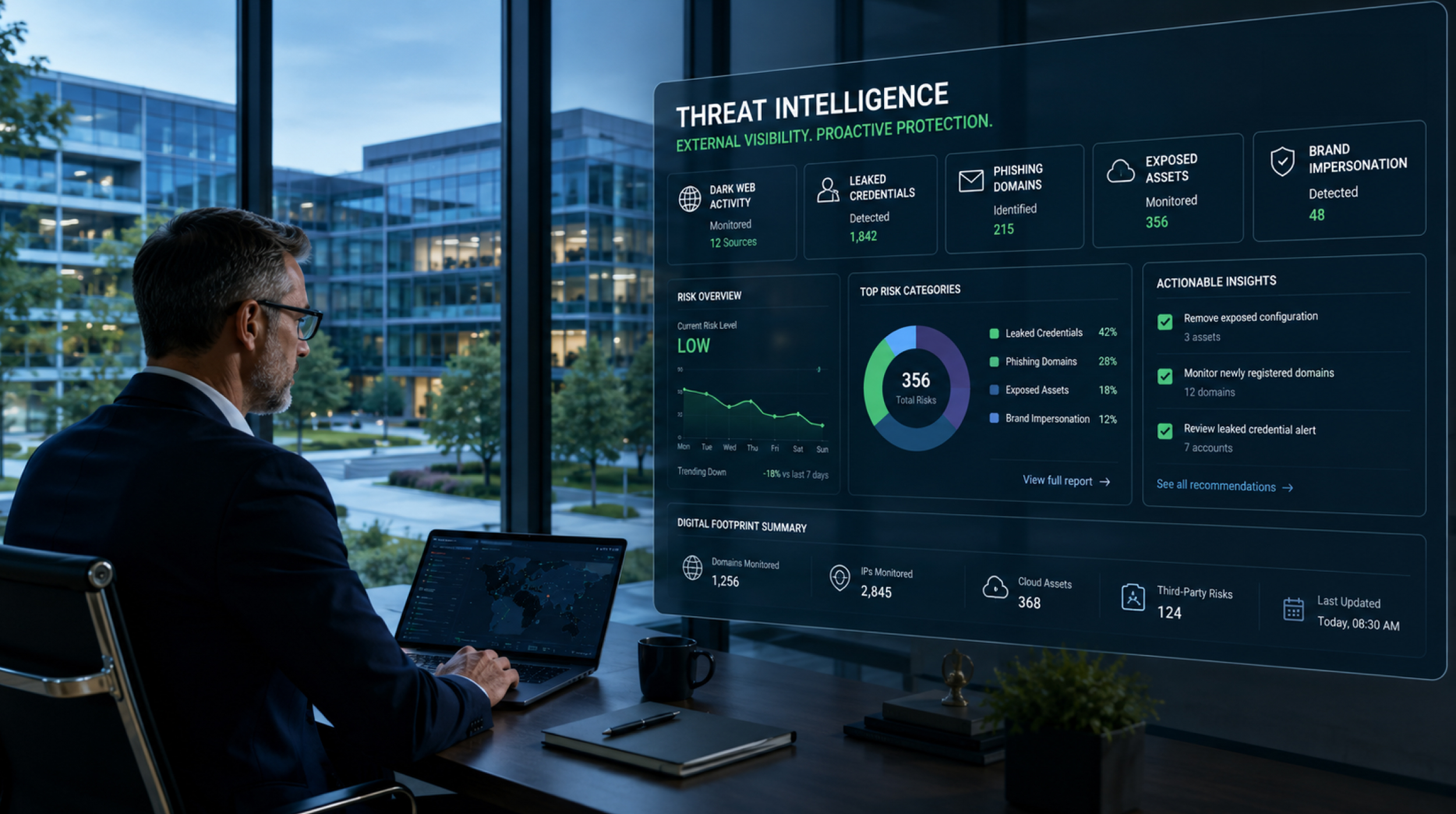
How Threat Intelligence Works as a Standalone Service
Threat Intelligence as a standalone service from LIREX provides continuous external visibility into an organization’s cyber risks without the need for SOC integration.
It is designed for organizations that want to identify and manage their external exposure, digital threats, and reputational risks independently of their internal SOC infrastructure.
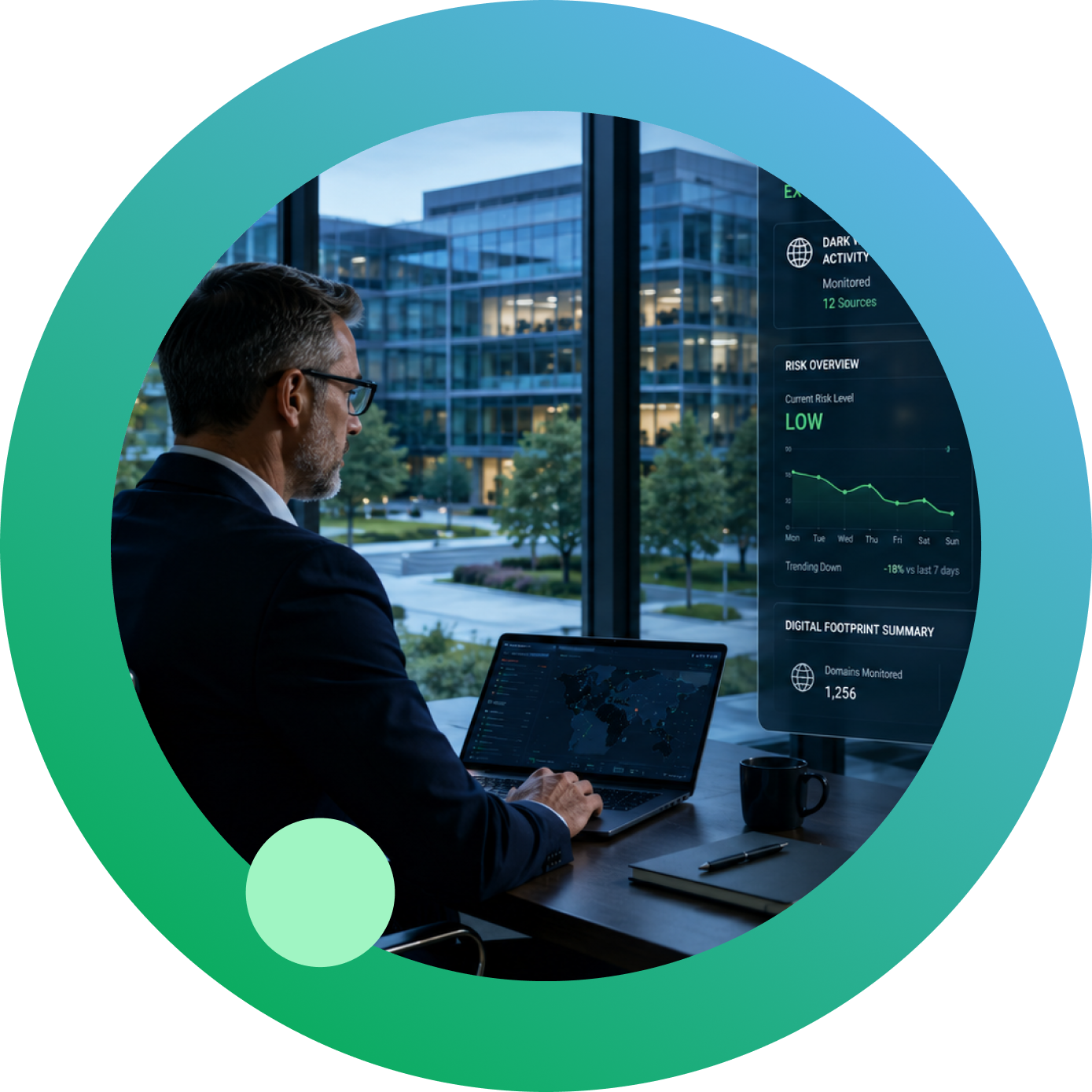
Threat Intelligence as a standalone service provides organizations with external visibility without requiring SOC integration.
This enables companies to understand what is happening beyond their perimeter and take action before external threats develop into real security incidents.
What Does the Standalone Service Provide?
Early Visibility
External risk indicators are identified before they reach the internal infrastructure.
Reduced Exposure
Organizations gain greater control over exposed assets, digital resources, and potential entry points for cyberattacks.Brand Protection
The service helps protect the organization’s brand, data, and employees from abuse, impersonation, and targeted cyberattacks.
Greater Control
Threat Intelligence helps organizations take a more proactive approach to managing their digital environment and external cyber risks.
Proactive Action
Organizations can take concrete risk-mitigation actions without relying on an internal SOC integration.Stages of the Standalone Threat Intelligence Service
The service follows a series of structured stages that transform external threat signals into manageable business risks.
1. Continuous External Monitoring
The service operates through continuous monitoring of a broad range of external sources:
- public online sources (OSINT);
- deep and dark web forums and marketplaces;
- data leaks and compromised accounts;
- phishing campaigns and brand impersonation attempts;
- external digital exposure — domains, IPs, and cloud assets;
- attacks targeting specific organizations, individuals, or services.
The objective is to identify early indicators that may reveal attack preparation activities or an attack already in progress.
2. Identification of Relevant Risks
The collected data is filtered and analyzed to determine:
- what genuinely affects the organization;
- which signals are associated with real threats;
- which data represents noise or irrelevant information.
This stage ensures that the organization receives focused intelligence about actual risks rather than simply large volumes of data.
3. Contextual Threat Analysis
Each identified signal is analyzed within the context of the organization and its business environment:- which systems, services, or brands are affected;
- the potential business impact;
- whether the threat is part of a broader campaign;
- the most likely attack scenarios.
4. Risk Prioritization
As a standalone service, Threat Intelligence prioritizes threats based on their relevance and potential impact:
- the likelihood of a real attack or misuse;
- the criticality of affected assets;
- the impact on business operations and reputation;
- the urgency of the required response.
This enables organizations to focus their efforts on the risks that matter most.
5. Recommendations and Actionable Guidance
Rather than simply providing data, the service delivers clear and practical recommendations:
- measures to reduce external exposure;
- response actions for leaked data or compromised accounts;
- recommendations for brand and domain protection;
- guidance for preventing phishing attacks;
- improvements to configurations and overall cyber hygiene.
6. Continuous Monitoring Cycle
The service is not a one-time assessment but an ongoing process:
- new threats are identified daily;
- existing risks are continuously reassessed;
- context is updated as conditions change;
- prioritization adapts to the current threat landscape.
This enables organizations to take action before external threats evolve into real security incidents.
External Visibility Turned into Manageable Risk
Threat Intelligence as a standalone service helps organizations identify threats earlier, understand their true significance, and take proactive action without requiring SOC integration.
Contact a LIREX expert for a personalized solution.
📧 office@lirex.com
📱 +359 2 9 691 691