
 Български

 Cyberthread Defence
 Data Protection & Backup
 Identity and Access Protection
 Strengthen Security Posture
 Physical Security IT Solutions
 Implementation, management and development
 On-premise
 Hybrid
 Cloud
Cloud
← Back to Threat Intelligence
External Attack Surface Management
External Attack Surface Management (eASM) is the process of continuously discovering, mapping, and analyzing all digital assets of an organization that are externally visible and accessible.
Within the context of LIREX Threat Intelligence, eASM provides real visibility into an organization’s external exposure — including assets that the business itself may not fully be aware of.
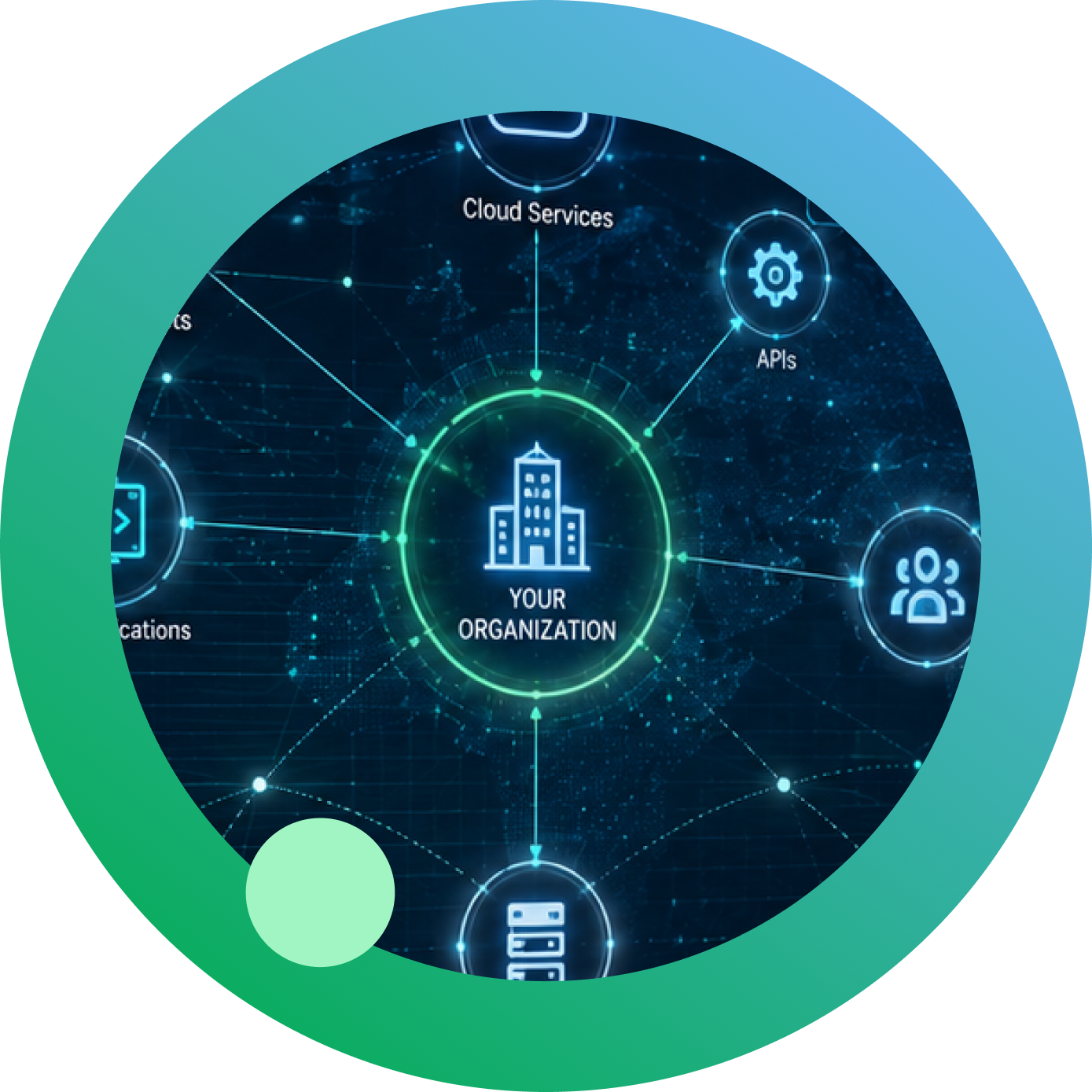
You can’t protect what you can’t see.
eASM transforms an organization’s fragmented digital presence into a clear, structured, and manageable security landscape.
Why Is External Attack Surface Management Necessary?
In today’s digital environment, new domains, cloud services, test environments, external integrations, and forgotten assets constantly expand the attack surface.
An Invisible Zone of Potential Risks
- unknown or forgotten domains and subdomains;
- publicly accessible IP addresses and services;
- misconfigured cloud resources;
- test and development environments exposed to the internet;
- shadow IT and unmanaged assets.
What Does eASM Provide?
- full visibility into external digital assets;
- a reduced security “blind spot”;
- better control over external exposure;
- faster response to new risks;
- a foundation for proactive cybersecurity.
How Does External Attack Surface Management Work?
1. Discovery of External Assets
The system automatically identifies all digital assets connected to the organization, including:
- domains and subdomains;
- IP addresses and public-facing services;
- cloud infrastructure;
- web applications and exposed endpoints.
The goal is to build a complete map of the organization’s external digital presence.
2. Mapping and Correlation
The discovered assets are analyzed and linked to the organization to determine:- which assets actually belong to the business;
- which are outdated or inactive;
- which may be unmanaged (shadow IT).
3. Exposure Assessment
Each asset is analyzed based on the risk it introduces:
- public accessibility;
- presence of vulnerabilities;
- misconfigurations;
- potential for abuse.
This makes it possible to understand not only what exists, but also what represents real risk.
4. Identification of Weaknesses
External Attack Surface Management detects:- open ports and exposed services;
- insecure configurations;
- outdated systems;
- unprotected administrative panels;
- exposed credentials or sensitive endpoints.
5. Risk Prioritization
Not all identified issues carry the same level of risk. eASM prioritizes risks based on:- likelihood of exploitation;
- criticality of the affected assets;
- potential business impact;
- possibility of chained or combined attacks.
How Does eASM Fit into Threat Intelligence?
- provides the real “map” of external exposure;
- adds context to identified threats;
- enables early detection of weak points;
- supports risk prioritization.